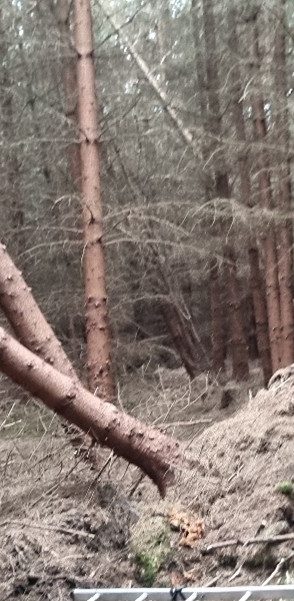
During the wet stormy winter we started getting wind throw in an area of second rotation woodland with very shallow soils over clay, and poor drainage. It was in an area where the Sitka had grown tall over 25 years, there was no herb layer and about 20 trees were either down or leaning.
The soils looked to have been damaged by two rotations of planting, and a mole hill looked to be entirely subsoil. The lifted root plates suggested no more than 20cm of ‘soil’.
We decided to try a regenerative approach focussing on looking after the soils and increasing plant diversity. Better soils should improve rooting and drainage, a herb layer will cover bare soil to reduce erosion and improve soil structure and thinning the trees should allow retained trees to develop a wider root plate. The resulting thinning should allow additional tree and shrub species to be established that are better suited to seasonally wet conditions and root to greater depth.
So far, we have high pruned the trees to provide brash to cover the soils, add organic matter in due course and allow more light it. Poorer trees have been ring barked so over the next couple of years they will die back, progressively opening up the canopy
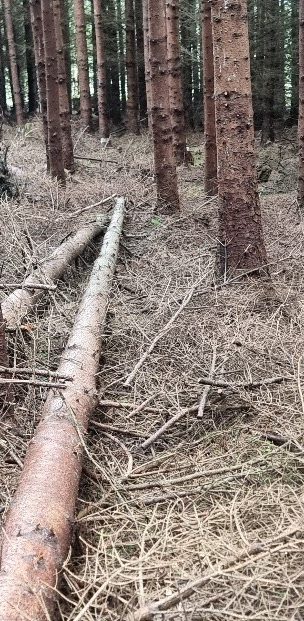
Leaning trees have been felled to remove pressure on their neighbours and then cut the lengths and left to help weigh down remaining root plates and then decompose.
New broadleaved trees and shrubs have been planted and are establishing well
Ring barking is also being used to progressively thin trees around the blown section, without sudden changes in the canopy, favouring the more tapered trees with buttress roots.
What had started to look like the beginning of a disaster is now looking much more positive, but will the changes just make it more open to future storms before the trees have had time to adapt? One of the advantages at our small woodland is that we can take risks which would be unacceptable at a commercial scale.