Gallery
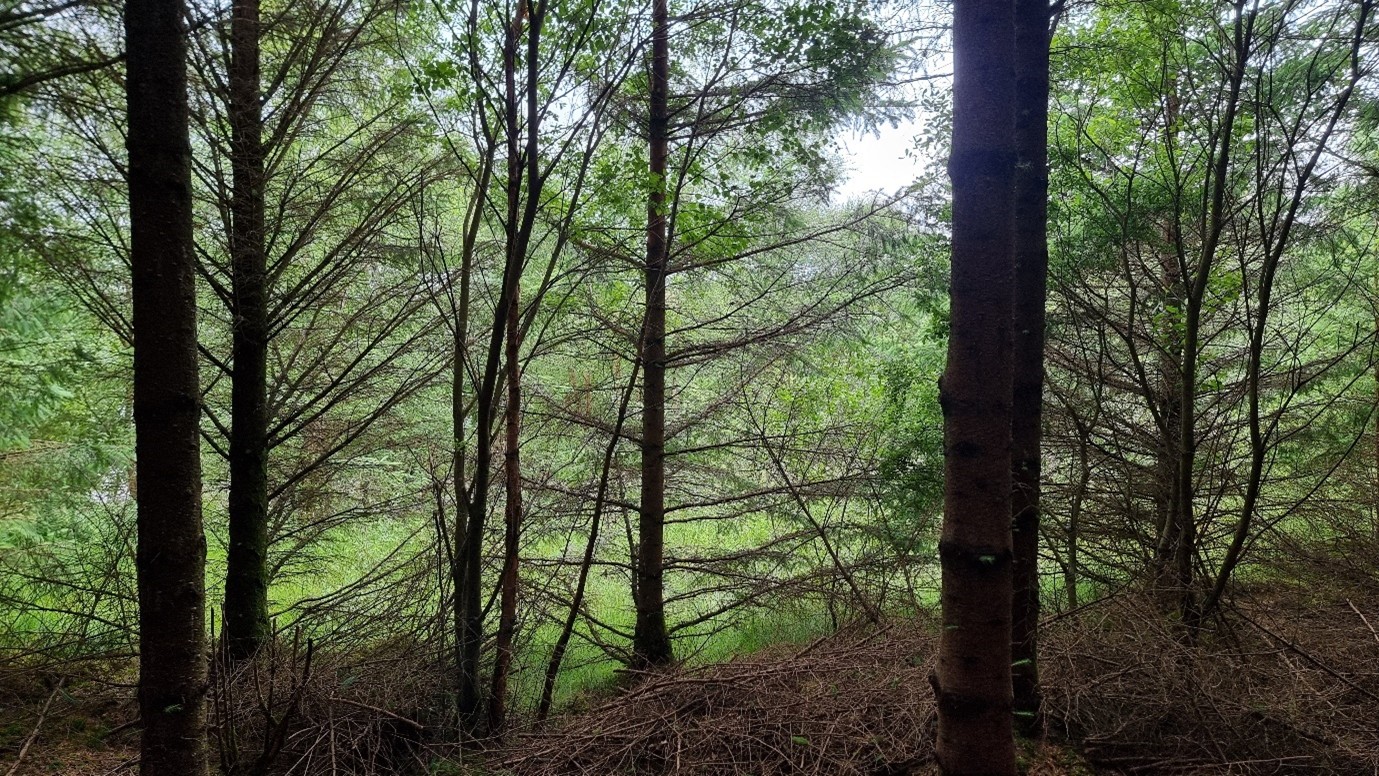
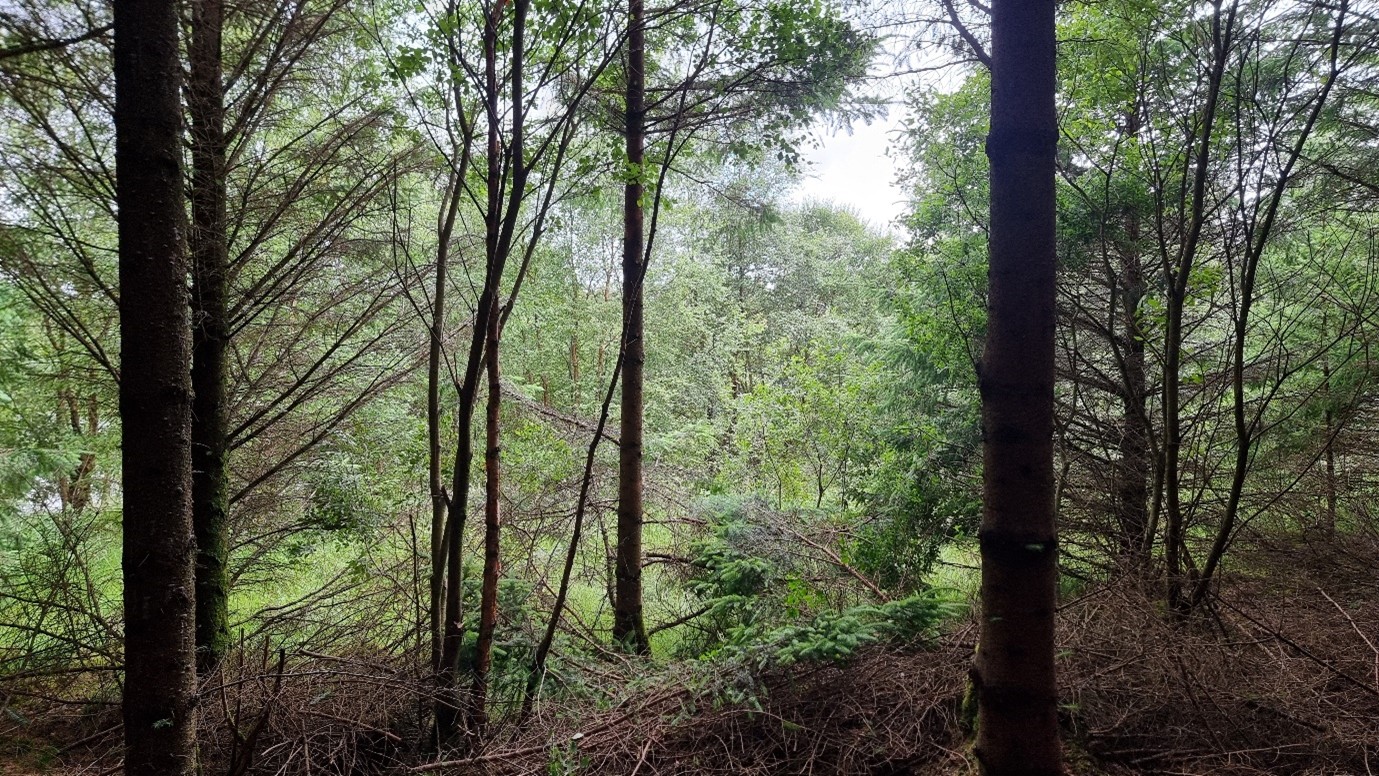
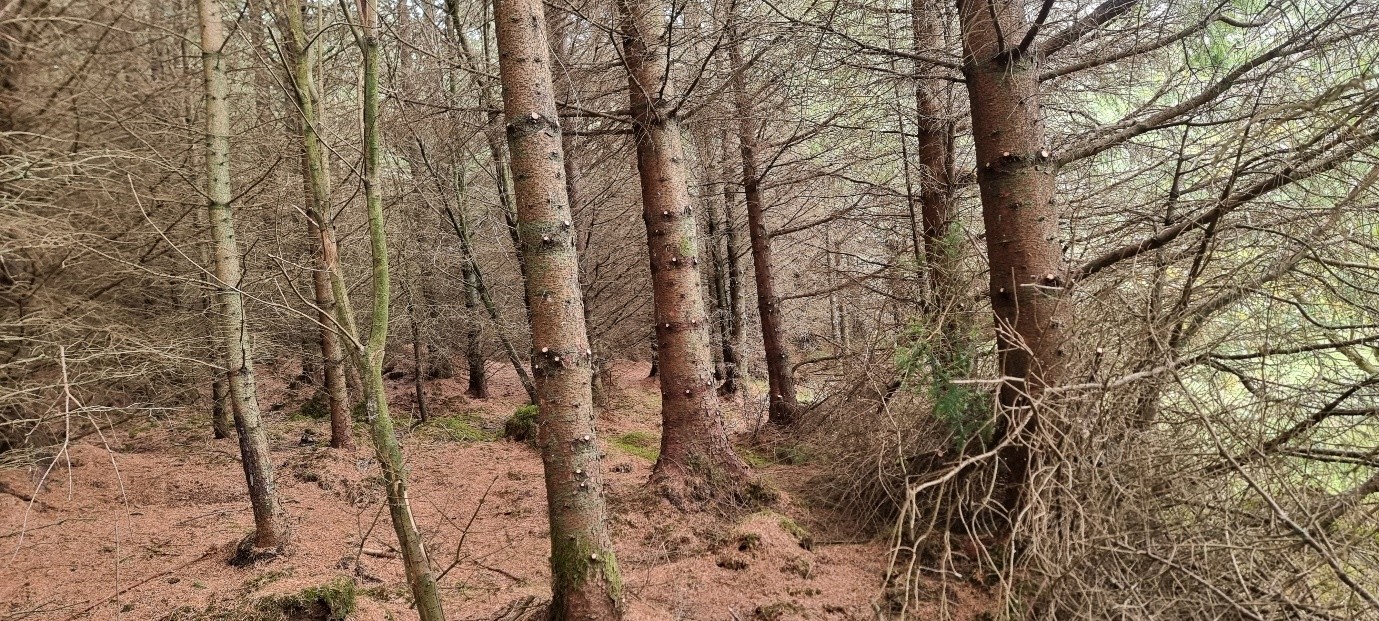
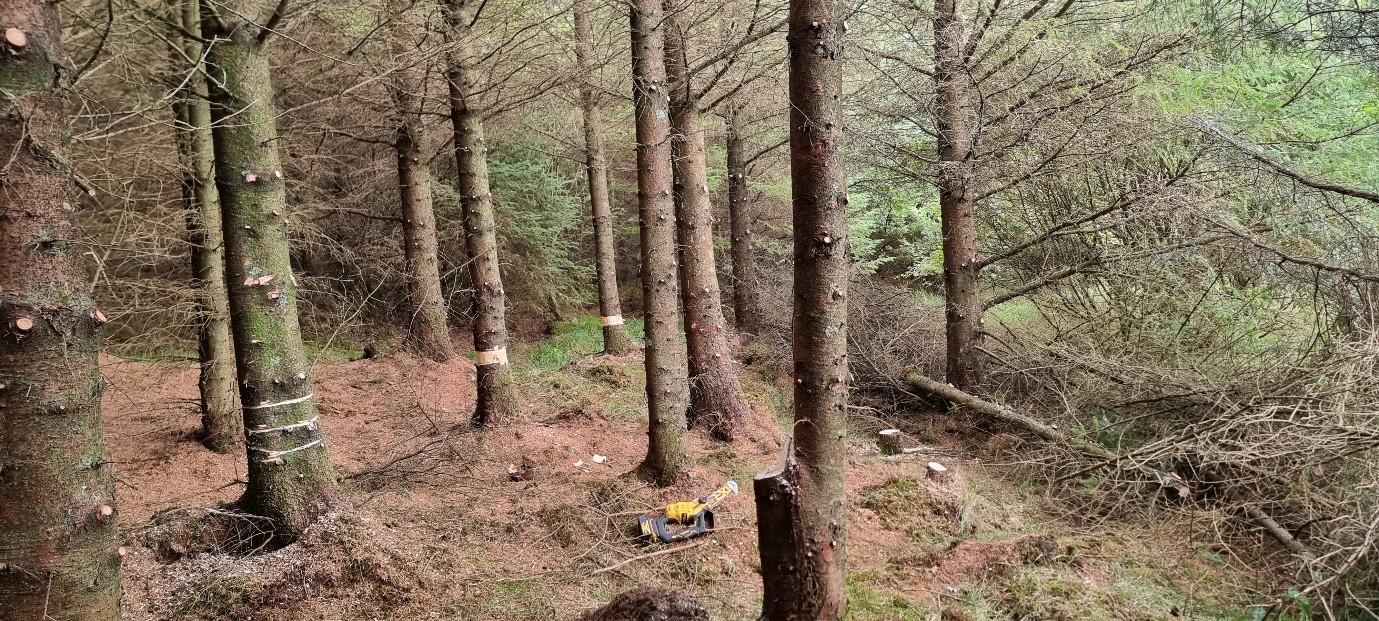
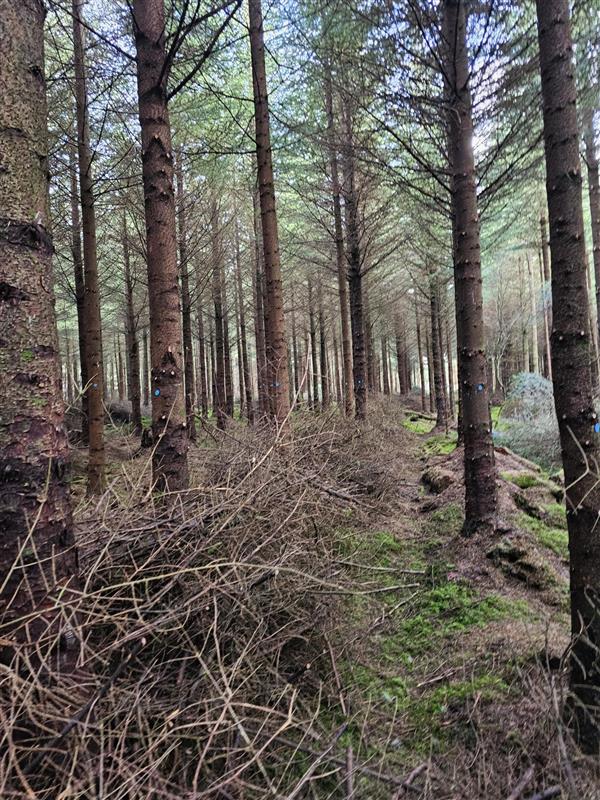
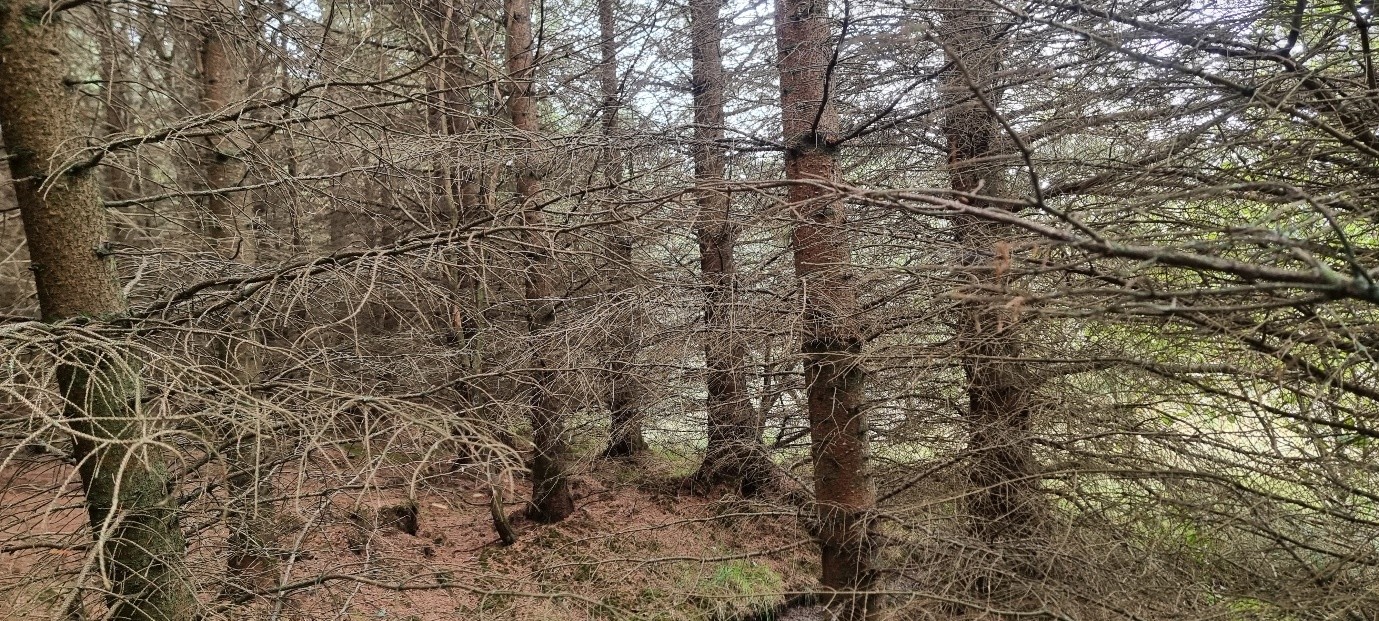
Here you can see key images which illustrate our approach to thinning described below
Thinning
Thinning in a sensitive site
All the professional foresters that have visited Wester Loch recently have said we should have started thinning at least five years ago, we were caught out by just how fast Sitka can grow. Because it is next to an internationally important wildlife site that’s very sensitive to silt or nutrient run-off we want to avoid large scale mechanical operations and need techniques that are efficient.
Having been advised by Andrew Macqueen, Charlie Taylor and Pat Hunter Blair that we needed to look at canopy thinning we decided to start by focussing on the woodland edges, looking to give the best trees in the outer two rows a bit more space and light to encourage the stockier wedge shaped trees with a strong buttress.
From within the wood the start point was typical Sitka thickets, so the first job was to open things up with electric pruners, silky zubats, and a DeWalt pruning chainsaw for the larger branches and skinny trees.
Arisings were stacked along the woodland edge to provide cover for wildlife, rot down to create better soils for the edge trees, and provide a low level windbreak where outer branches have been thinned.
Once there was easier access to see the upper structure, suppressed skinny trees were removed, key trees favoured by ring barking some of their neighbours, and co-dominants ring barked so they will progressively die back over the next year or so, avoiding sudden changes in the canopy.
On the outer trees dead branches were pruned, and outer living branches thinned to reduce the knots in the timber in due course. Rate of progress was pretty good and with a few more days work we should have done all the outer boundaries of the Sitka plantation. The next job will be to look at the next few rows in to select and thin to favour the best trees every 10m or so. Hopefully this will also slow upwards growth and encourage the stems to thicken up.
Edge pruning provided inspiration for the next little research project - to look at blurring the boundaries between the Sitka and the adjacent belts of broadleaved planting. Could management over a number of years merge the two by progressively opening up the Sitka to allow hazel planting under the conifers and eventually create a wind-firm mixed woodland boundary belt? This could provide a shelter-belt from storms and a wildlife refuge in the very long term and nurture future planting within the body of the wood.
Below are before and after photos from an initial trial, seeing if opening some gaps could increase bat use of glades we within the conifer a few years ago.